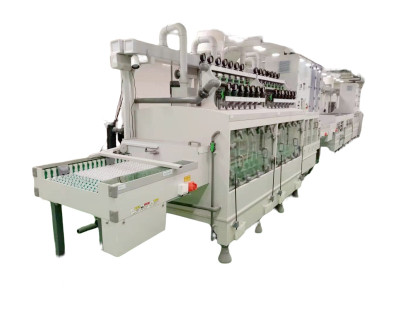
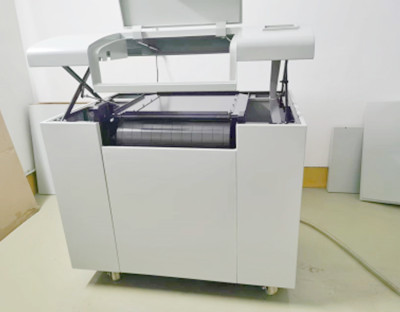
Fotoplotter laser, chamado fotolotter, é um produto de fotoconfiguração integrando tecnologia óptica laser, tecnologia microeletrônica e máquinas de ultra precisão. É usado para desenhar vários gráficos, imagens, texto ou símbolos em filmes fotosensíveis.
Princípio de trabalho
O fotolote laser usa um laser para escanear o filme para gerar gráficos, e seu princípio é o mesmo que a arma eletrônica no tubo de fotografia da TV scanna o material fluorescente na tela. Primeiro, a imagem do circuito impresso é mapeada em um grande array de armazenamento, e então o feixe laser é ligado ou desligado (modulado) de acordo com o valor da célula correspondente no array de armazenamento, obtendo assim o filme de processo requerido. Fotoplotters laser usam lasers como fonte de luz, que tem as vantagens de foco fácil e concentração energética, e é muito benéfico para exposição instant ânea e rápida de negativos. A exposição adota o tipo de scanning, independentemente da densidade, a exposição pode ser completada no tempo mais curto, e só leva alguns minutos para desenhar um negativo. Portanto, tornou-se o principal fluxo de hoje’ a indústria de pintura leve.
A fonte de luz do fotolotter laser usa principalmente lasers de gás, como argão, hélio e neon. A fonte de luz do laser de gás tem uma alta intensidade mas uma vida limitada, cerca de 6000-10000 horas, então a fonte de luz precisa ser substituída após mais de um ano de uso. Alguns fabricantes de fotolotes usam lasers semicondutores como fontes de luz, mas a produção de lasers semicondutores de maior potência ainda não é madura.
Processo
Os dados de design gerados pela CAD são convertidos em dados de desenho de luz (principalmente dados Gerber) e processados pelo sistema CAM para completar o pré-processamento do desenho de luz (imposição, espelho, etc.). Os dados processados são enviados ao fotolote, e são convertidos em dados raster pelo processador de dados raster do fotolote, e os dados raster dirigem diretamente o fotolote laser para completar a fotolote.
 09 de junho de 2022