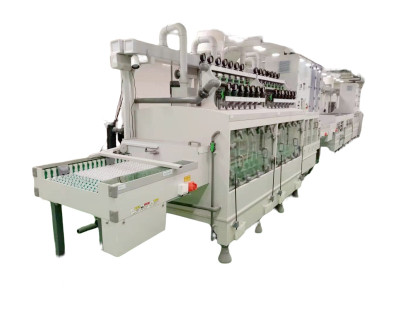
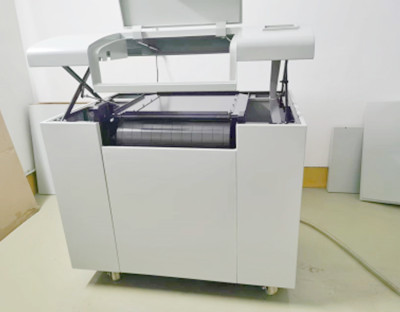
Laser-Photoplotter, als Photoplotter bezeichnet, ist ein Phototypesetzungsprodukt, das Laseroptik, Mikroelektronik und Ultrapräzisionsmaschinen integriert. Es wird verwendet, um verschiedene Grafiken, Bilder, Texte oder Symbole auf lichtempfindlichem Film zu zeichnen.
Arbeitsprinzip
Der Laser-Photoplotter verwendet einen Laser, um den Film zu scannen, um Grafiken zu generieren, und sein Prinzip ist das gleiche wie die Elektronenpistole im TV-Bildrohr das fluoreszierende Material auf dem Bildschirm scannt. Zunächst wird das Bild der Leiterplatte in eine große Speicheranlage abgebildet, dann wird der Laserstrahl entsprechend dem Wert der entsprechenden Zelle in der Speicheranlage eingeschaltet oder ausgeschaltet (moduliert), wodurch der gewünschte Prozessfilm erhalten wird. Laser-Photoplotter verwenden Laser als Lichtquelle, die die Vorteile einer einfachen Fokussierung und Energiekonzentration hat und für eine sofortige und schnelle Belichtung von Negativen sehr vorteilhaft ist. Die Belichtung nimmt den Scantyp an, egal wie hoch die Dichte ist, die Belichtung kann in kürzester Zeit abgeschlossen werden, und es dauert nur ein paar Minuten, um ein Negativ zu zeichnen. Daher ist es der Mainstream von heute’ s Lichtmalerei Industrie.
Die Lichtquelle des Laserphotoplotters verwendet hauptsächlich Gaslaser wie Argon, Helium und Neon. Die Lichtquelle des Gaslasers hat eine hohe Intensität, aber eine begrenzte Lebensdauer, etwa 6000-10000h, so dass die Lichtquelle nach mehr als einem Jahr der Verwendung ersetzt werden muss. Einige Photoplotterhersteller verwenden Halbleiterlaser als Lichtquellen, aber die Produktion von Halbleiterlasern mit höherer Leistung ist noch nicht reif.
Prozess
Die durch CAD erzeugten Konstruktionsdaten werden in Lichtzeichnungsdaten (meist Gerber-Daten) umgewandelt und vom CAM-System verarbeitet, um die Lichtzeichnungsvorbearbeitung (Imposition, Spiegelung usw.) abzuschließen. Die verarbeiteten Daten werden an den Photoplotter gesendet und vom Rasterdatenprozessor des Photoplotters in Rasterdaten umgewandelt und die Rasterdaten steuern den Laserphotoplotter direkt an, um die Photoplotting abzuschließen.
 9. Juni 2022